
Core42 and VAST Data have partnered to advance the sovereign Core42 AI Cloud for government and regulated industries. Addressing challenges of data sharing and transparency, the platform enables secure, large-scale AI operations. VAST Data CEO, Renen Hallak, and Core42 EVP, Raghu Chakravarthi, share their perspectives on real-time intelligence, innovation and the UAE’s leadership in Sovereign AI.

Sovereign AI and UAE leadership
In 2024, Core42 partnered with VAST Data to strengthen the Core42 AI Cloud, a high-performance, scalable and sovereign platform designed for government and regulated industries. By uniting leading accelerators under one roof, the AI Cloud enables training, fine-tuning and inference at speed and scale, while ensuring data and governance remain firmly under national jurisdiction.
For Renen Hallak, CEO of VAST Data, the concept of Sovereign AI is critical for every nation. “No country wants to depend entirely on others for such a powerful technology – whether for military, commercial, or cultural reasons. Everybody wants to have this ability in-house,” he said. “Particularly in the UAE, we’re seeing them leapfrogging other countries in speed and determination. Core42 has been a great partner for us to enable that.”
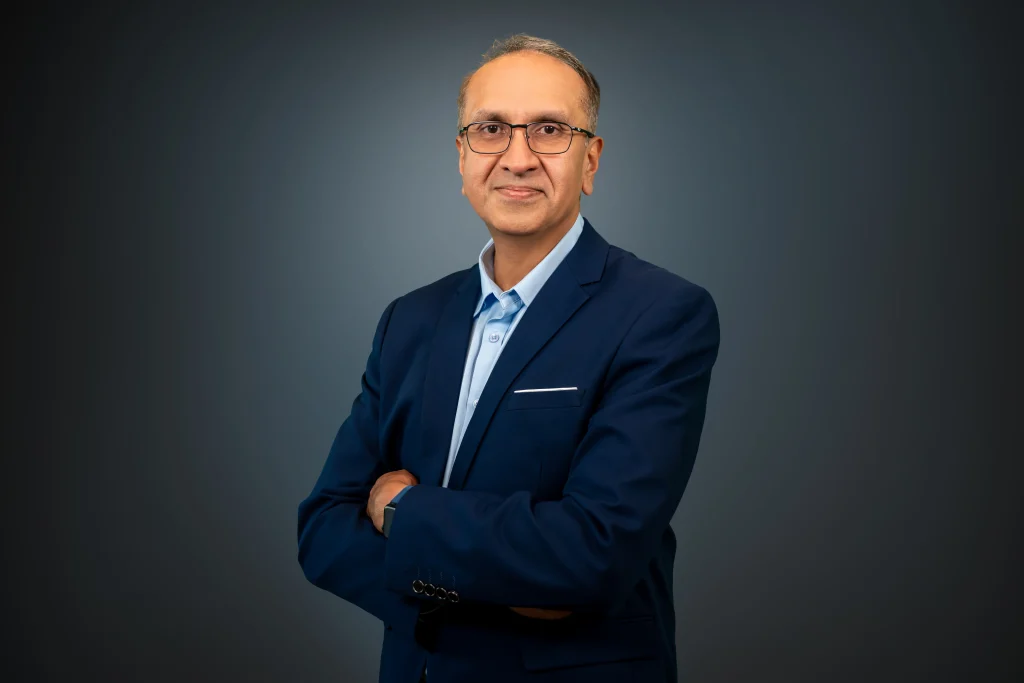
Raghu Chakravarthi, EVP at Core42, emphasises that sovereignty is no longer just about control but about trust at scale. “By combining scale with trust, Core42 and VAST are setting a new model of sovereignty. Organisations can move data securely, embed Zero Trust principles into the fabric of the AI Cloud and innovate on their own terms.”
The Core42 AI Cloud: Scale with sovereignty
Governments need both scale and control – mobility of data without loss of sovereignty. Traditionally, these have been seen as opposing forces.
“Scale demanded openness, while sovereignty demanded restriction,” explained Chakravarthi. “What we are proving with VAST is that the two can be designed to reinforce each other rather than conflict.”
Hallak added that solving this paradox requires the ability to observe, control and reproduce. “You want the ability to observe who is accessing what, to understand why certain AI responses are generated and to reproduce those processes over time. All those controls must be in place for Sovereign AI to be effective.”
VAST’s architecture enables data to move seamlessly across environments while retaining a single system of record. Core42 layers on continuous enforcement of residency, access and compliance policies through its Insight controls.
The result is that ministries, banks and other regulated sectors can treat their data as fluid – shifting workloads where compute is most efficient – while remaining fully within UAE jurisdiction. Instead of compromising between performance and protection, the Core42-VAST model delivers both.
Building an architecture of trust
Chakravarthi describes the Sovereign AI Cloud as an ‘architecture of trust’, founded on three principles:
- Sovereign trust containers – Secure enclaves where compute, storage and policy are bound together under national oversight.
- Passport layer – Data objects carry their own policies and encryption boundaries, making governance portable and persistent.
- Consistency through abstraction – All data types are presented in a unified namespace, ensuring compliance is applied uniformly while supporting AI-scale performance.
“These principles mean sovereignty and scale advance hand in hand, enabling governments to share, analyse and act on data with complete trust,” Chakravarthi said.
Embedding national values into AI
Sovereign AI is not only a technical issue but also a cultural and ethical one. “Until now, AI has largely been built by a few very large organisations,” he said. “We’re now starting to see countries building their own models and fine-tuning them. This gives us the opportunity to inject values and cultural norms into the specific AIs being built,” Hallak said.
“Sovereign AI capabilities mean AI can interact with us based on our specific requirements – including values and cultural nuances. This is the next exciting phase of AI: making it more specific and customised than it is currently.”
Urgency vs patience
Nations are divided between those that move cautiously and those that adopt rapidly. Hallak believes the UAE falls into the latter category: “Some governments are too patient, others are reactive. The UAE is acting quickly, taking advantage of new technologies earlier than most. I think that’s the right approach. Those who wait too long will be left behind.”
Workforce transformation in the age of AI agents
The rise of Sovereign AI agents will reshape government and industry workforces. “Many people believe only very experienced workers will have a place in the new workforce, but I disagree,” Hallak said. “Those who understand how to use AI will hold the most prominent positions, and that tends to be the younger generation.”
He predicts a shift from producing work to guiding AI. “Productivity will be higher – those in AI positions will instruct agents, shifting from doing the work themselves to verifying, guiding and scaling it. This approach means increased efficiencies, with the overall workforce achieving far more with improved tools and resources.”
From siloed data to sovereign intelligence
For many governments and regulated industries, the challenge isn’t a lack of data but its fragmentation. Critical information is trapped in legacy systems, ministries and formats never built for AI-scale analysis. This slows innovation and undermines trust in outcomes.
Chakravarthi explained: “We start by consolidating data without disrupting existing infrastructure. VAST’s architecture creates a unified namespace across all types, while Core42’s Insight platform enforces consistent residency, access and compliance.
“That transforms isolated datasets into a governed, unified foundation ready for national-scale innovation.”
Hallak emphasised how re-architecting the stack enables governments to break trade-offs. “We built a single data platform agnostic to workloads – supporting legacy systems as well as AI training, inference and agentic workloads. Consolidation means all data is accessible to next-generation AI without duplication or complexity.”
Scaling AI from pilots to production
Governments and agencies can struggle to move from proof-of-concept to mission-critical deployment. Core42 addresses this with the AI Cloud, which unifies diverse models and enforces sovereignty throughout the life cycle via its Insight platform.
Structured Cloud Transformation Services, available through Microsoft Azure Marketplace, cover migration, modernisation and hypercare, while enablement programmes provide training and expert guidance.
“Just as important,” Chakravarthi said, “we support cultural transformation by aligning initiatives with national priorities and enterprise goals, helping leaders and cross-functional teams embed AI into strategy and daily operations.”
Hallak added: “The first phase of AI – research and prototypes – is behind us. The next phase requires secure, simple, compliant operating systems that make AI accessible at scale. That’s what our platform delivers.”
Migration, security and Smart Cities
Governments face pressure to modernise while ensuring sovereignty. VAST’s global namespace and sync engine integrate legacy data across public, private and Edge environments, while Core42’s Sovereign Landing Zones embed compliance directly into Azure cloud services. This balances innovation with jurisdictional control.
Cybersecurity is embedded throughout. “AI brings new threats as well as new protections,” said Hallak. “We must govern what AI agents can access and communicate and preserve the ability to observe and reproduce interactions over time.”
Meanwhile, Smart Cities generate torrents of unstructured data – video, sensors, geospatial feeds. Together, Core42 and VAST enable real-time monitoring and multimodal AI analysis at scale, turning floods of raw data into actionable intelligence under sovereign controls.
National competitiveness and Gulf leadership
Hallak argues that AI will transform every sector. “I’ve tried to think of cases where it won’t have an impact but haven’t found much. The physical robots we’re seeing – especially in the Gulf region, which is advancing much faster than anywhere else, with things like flying cars – are rapidly progressing.”
For the UAE, this pace is a strategic opportunity. “The Gulf region, and UAE in particular, are so far ahead of the curve compared to the rest of the world. It’s an opportunity for this region to redefine itself and become a central force. The UAE is in an amazing position to amass a lot more relevance, impact and power through these new technologies.”
Chakravarthi added: “By creating an architecture of trust, we enable governments to innovate confidently, knowing their sovereignty is preserved. That’s how nations turn AI into a foundation for long-term growth.”